
Traffic Tickets
The De Facto Contracts Binding Our Freedom

In the fabric of American law, the traffic ticket seems like a minor thread, yet it might weave a complex pattern that challenges our understanding of justice, liberty, and due process. This article explores the compelling argument that traffic tickets are, in effect, de facto contracts, not merely penalties, and the profound implications this has for our legal system and personal freedoms.
The Language of Contract
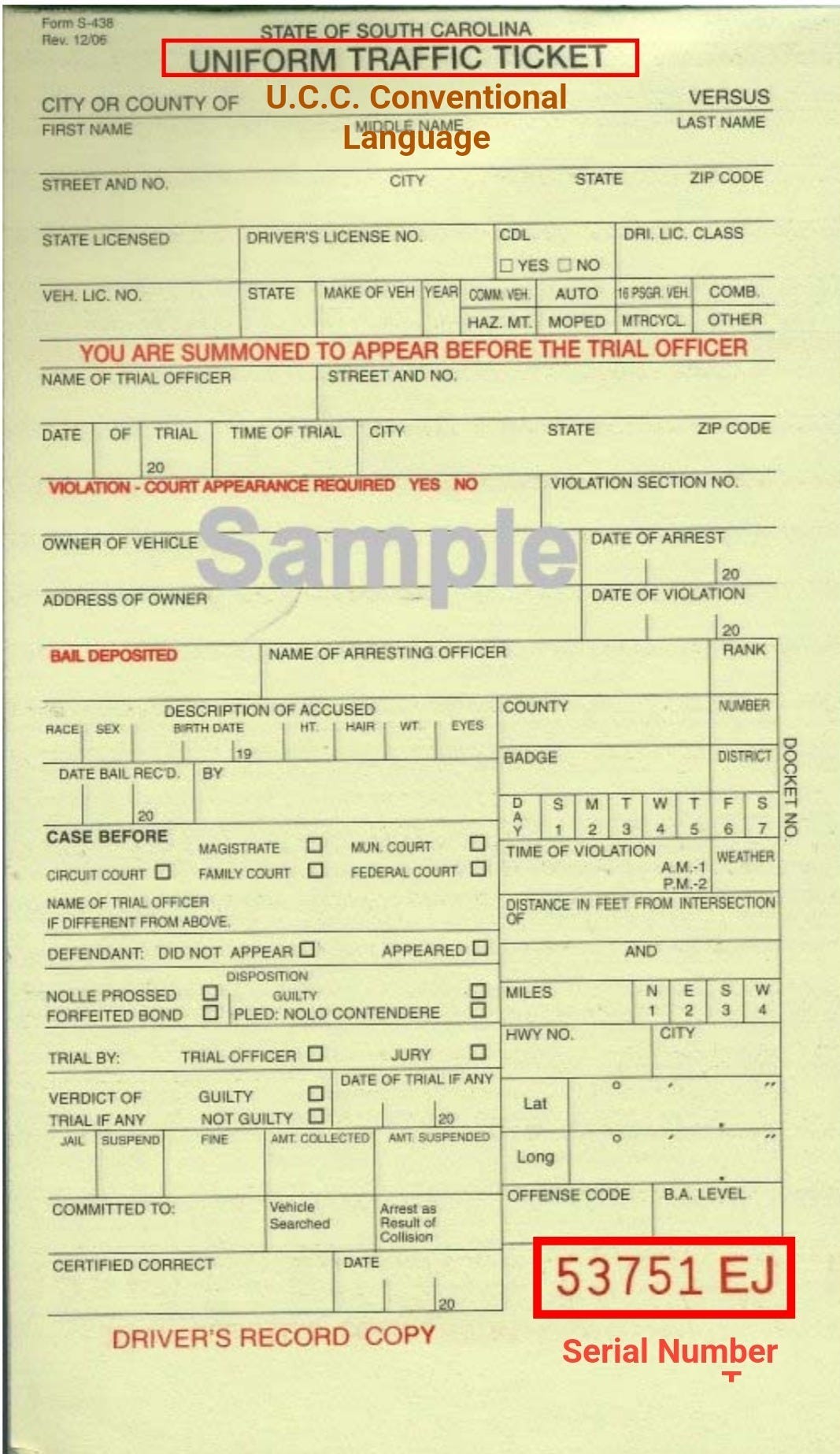
Every traffic ticket, across various jurisdictions, shares a common language that mirrors contractual agreements. These citations don't simply state an offense; they offer terms for resolution. Phrases like "pay by this date to avoid further action" or "appear in court by" imply an agreement. You're presented with an offer: pay the fine to resolve the issue, much like accepting the terms of a contract. This isn't just about semantics; it's about the legal implications of such phrasing. If these tickets are contracts, then the state is engaging citizens in a contractual relationship, often without explicit consent or negotiation.
The All Caps Indicator and Serial Numbers
Adding to this contractual interpretation is the striking use of all capital letters on tickets, often labeled "UNIFORM TRAFFIC TICKET." This usage mirrors the nomenclature found in the "Uniform Commercial Code" (UCC), where "uniform" denotes a consistency across state jurisdictions, aiming to standardize commercial law. Moreover, each "Uniform Traffic Ticket" typically includes a serial number, a feature distinctly indicative of commercial transactions in any other context. Just as commercial contracts are often numbered for tracking and record-keeping, this serial number on a traffic ticket suggests it's not merely a penalty but a commercial interaction between the state and the individual, thereby hinting at a contractual nature.
Adhesion Contracts
Further complicating this interpretation is the notion that traffic tickets might be considered adhesion contracts. These are contracts where one party sets the terms while the other has little to no ability to negotiate. In the case of traffic tickets, the state dictates the terms (pay the fine or face further legal action), and the recipient has no real opportunity to alter these conditions. This characteristic of adhesion contracts underscores the lack of true consent in these interactions, highlighting potential issues of fairness and due process.
The Due Process Dilemma
The potential for incarceration based on non-compliance with a traffic ticket's terms elevates this discussion from theoretical to critical. If a ticket is an adhesion contract, and failure to adhere to its terms leads to criminal charges or jail time, we face a significant due process concern. The American legal system is built on the principle that one should not be punished without a fair trial, where innocence or guilt is established. However, if someone can end up in jail merely for not engaging with this "contract," we're witnessing a bypass of traditional due process. This situation could result in individuals, who might be considered "innocent" in the context of a full legal hearing, facing punishment for what essentially began as a civil matter.
Implications for Justice
The notion that traffic tickets function as de facto adhesion contracts raises serious questions about justice and equity. It suggests that those unable to pay fines could be disproportionately punished, not for the initial infraction but for their economic situation, effectively criminalizing poverty. Moreover, the escalation from civil to criminal without adequate judicial review undermines the constitutional protections we hold dear, potentially leading to a scenario where innocent people are incarcerated for what amounts to a breach of an unrecognized contract.
A Call for Clarity and Reform
Recognizing traffic tickets as adhesion contracts, especially with the shared lineage of "uniform" from the UCC to traffic enforcement, and the use of serial numbers, challenges us to reevaluate our legal practices. This perspective demands transparency in how tickets are issued and handled, ensuring individuals understand they're entering into an adhesion contract. More importantly, it calls for reforms to ensure that penalties for non-compliance do not bypass due process, safeguarding against the unjust incarceration of those who might not fully comprehend or agree to these terms.
Conclusion
The argument that traffic tickets are de facto adhesion contracts, bolstered by the use of all caps, the contractual language, the presence of serial numbers, and the nature of adhesion, isn't merely academic; it strikes at the core of our legal system's integrity. It's a call to action for lawmakers, legal scholars, and citizens alike to scrutinize and possibly reform how we enforce minor infractions. In America, where liberty and justice are paramount, we must ensure that our legal mechanisms do not, even inadvertently, lead to the erosion of due process or the jailing of the innocent under the guise of contractual obligation.